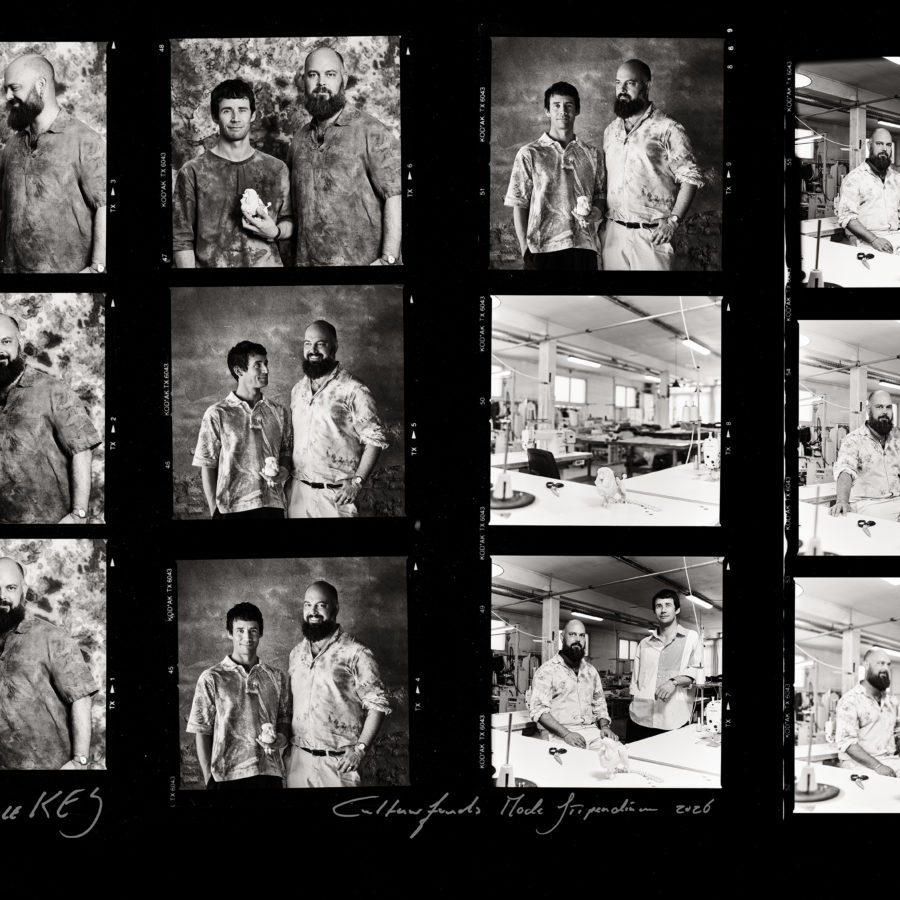
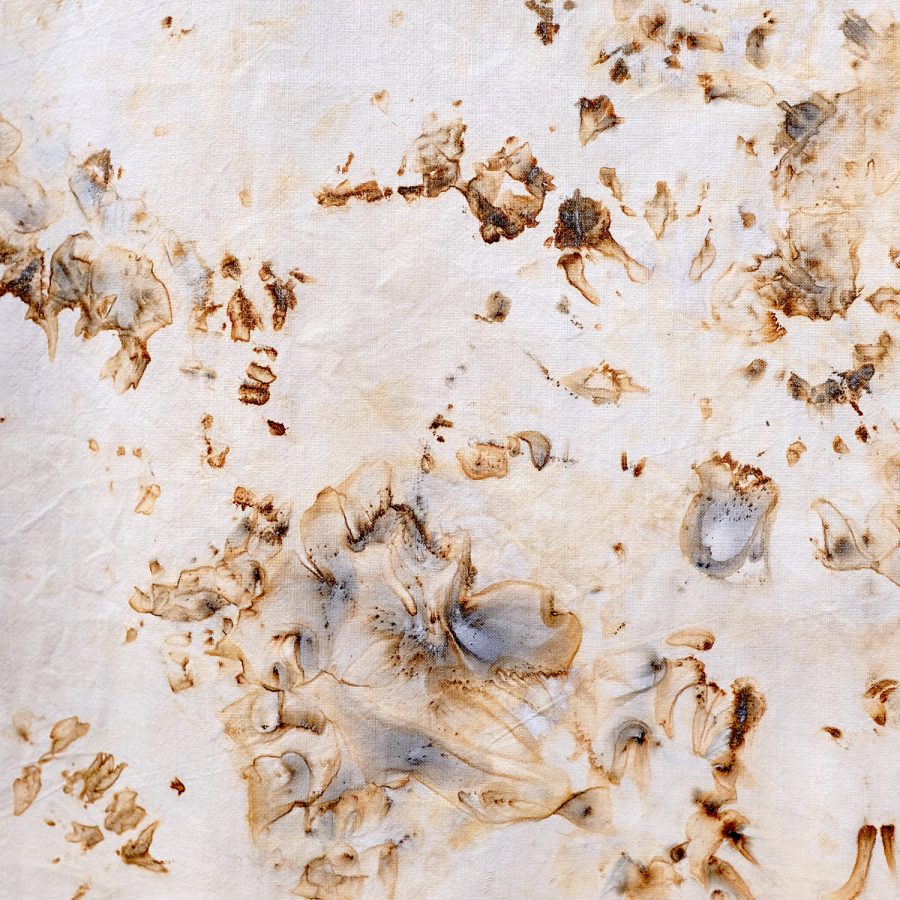
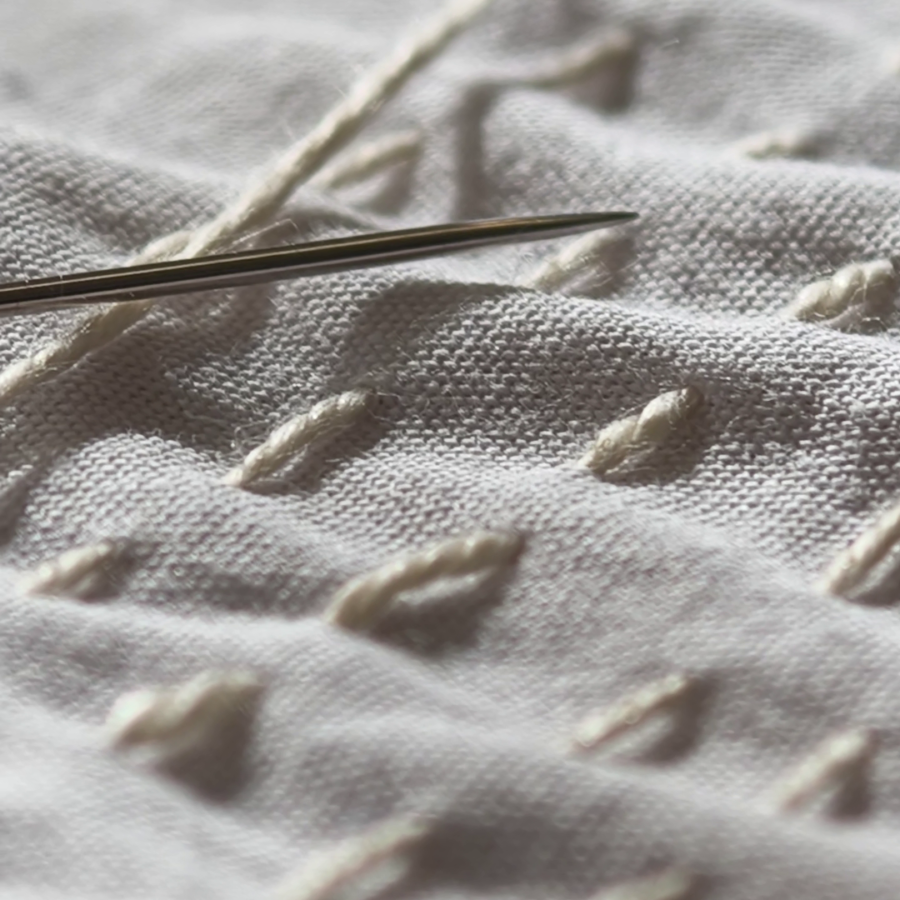
What began as scientific research in a laboratory evolved into a first series of wearable garments dyed with a melanin-like biopolymer derived from waste material.
The project is still very much a Proof of Concept, but it opens an interesting conversation about the future of fashion materials and the role experimentation can play within a more circular industry.

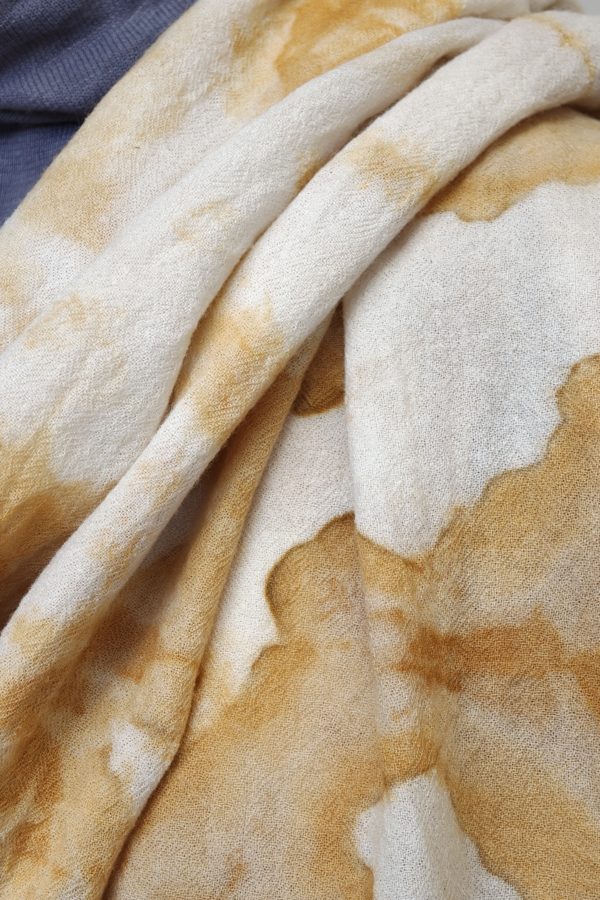
Working with existing and overlooked materials has always been part of our way of thinking. From post-consumer textiles to natural dyeing and repair techniques, much of our work begins with the question: what already exists, and how can we give it new value?
This collaboration felt like a natural extension of that philosophy. The idea that something as unexpected as wastewater sludge could become part of a textile process challenges traditional ideas of beauty, waste, and luxury.
At the same time, it shows how science, craftsmanship, and fashion can strengthen one another in the search for alternatives to conventional production methods.
We strongly believe that many of today’s challenges cannot be solved within a single industry alone. By connecting different disciplines, knowledge fields, and social issues, new ideas and solutions can emerge. Projects like this bring together fashion, science, sustainability, and material innovation in a way that allows different sectors to learn from one another and move forward together.
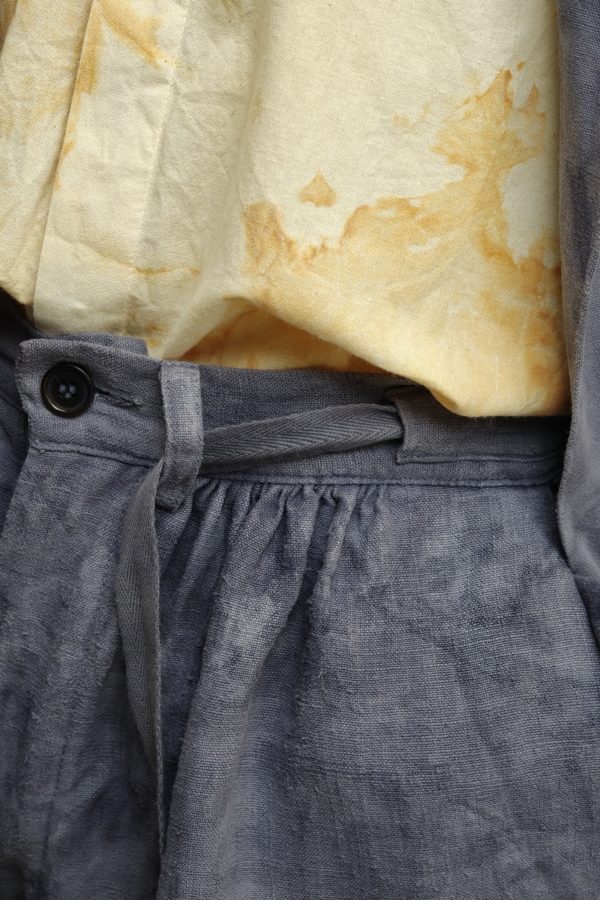
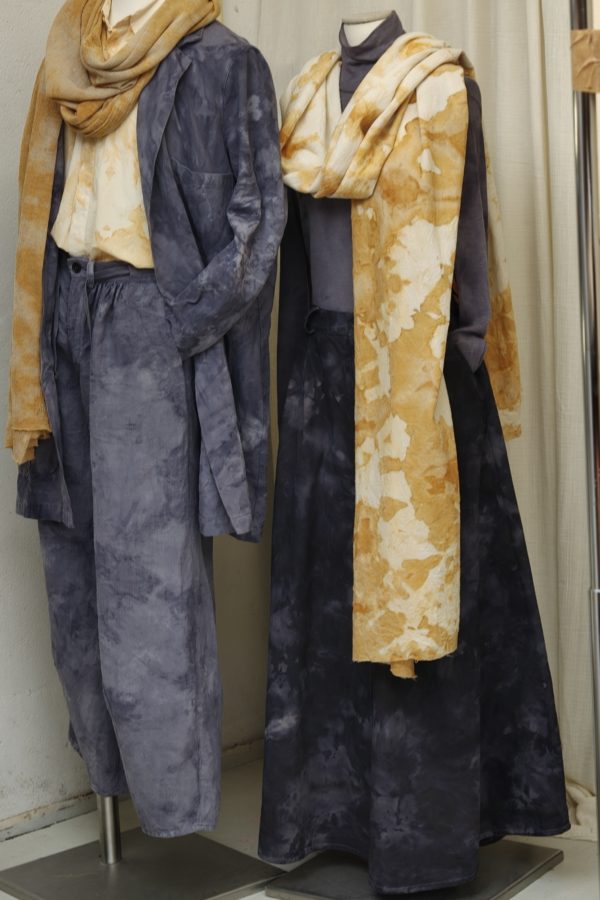
Not every experiment immediately becomes a finished product or scalable solution. Sometimes the value lies in the process itself: testing new ideas, learning from materials, and allowing space for unexpected outcomes.
For us, these kinds of collaborations are essential because they keep fashion moving forward in a more thoughtful direction. Innovation does not always come from creating something entirely new, but often from looking differently at what already exists. This project is a reminder that waste can still hold beauty, potential, and new stories waiting to be told.
Follow us via Instagram and subscribe to our Newsletter for more updates about this project in the future! Would you like more information, or start another research project together with Hul le Kes? Please send us an email.